All Categories
Featured
Table of Contents
A shop near a college campus may have really various need patterns (a regular run on bagels and lox at 1 a.m.) than one in a city's financial district (where traders might turn up for air at 11:30 a.m. for egg salad sandwiches). Other inventory management elements that grocers must consider consist of optimum delivery times, packaging requirements, and safety stock levels.
Foreseeable occasions, such as greater need for salads and beverages during summertime and more demand for soups and spicy foods in the winter season, are easier to plan for.
Stock is among the most crucial properties for any organization, and reliable inventory management is particularly vital in the fast-paced world of e-commerce. You need to fulfill the demand for fast delivery by ensuring there's constantly sufficient stock to meet consumer orders, but without binding money in excess stock.
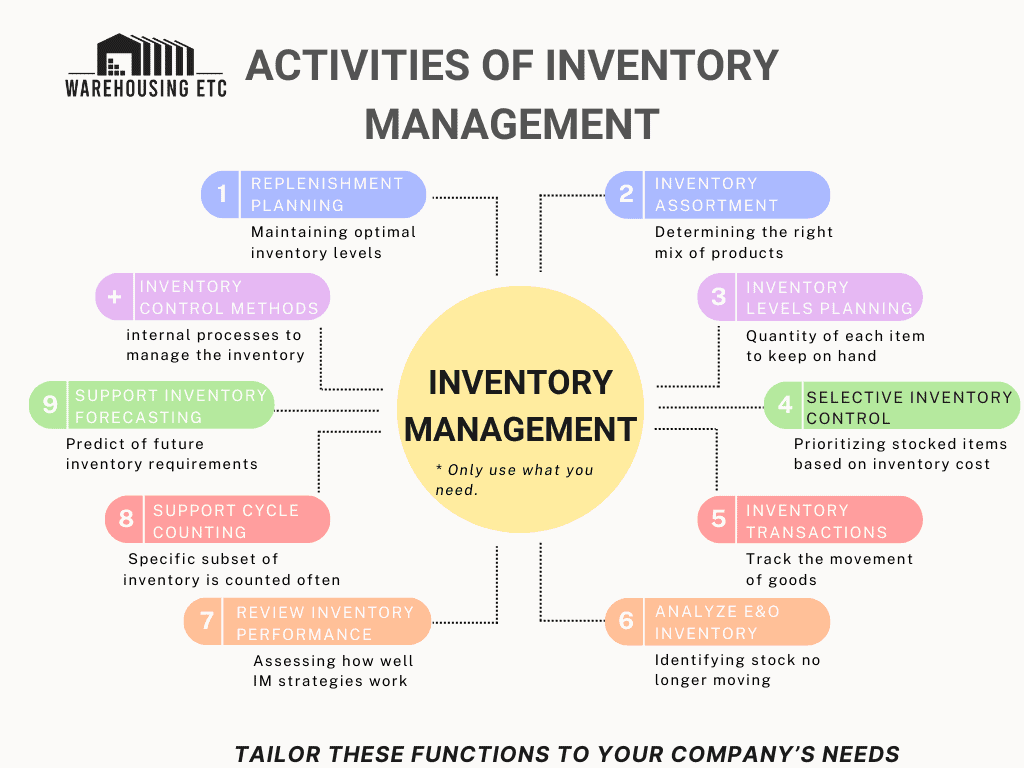
Stock can include basic materials, components, and completed goods prepared for sale. Inventory management is the procedure of handling and monitoring this stock in the most effective method possible so that you always have the ideal amount in the right location at the right time. It has to do with knowing just how much is needed and when to order it, and keeping track of whatever across several places and sales channels.
Streamlining Operations to Ensure Sustainability
When ordering brand-new inventory for your storage facility, you must aim to buy the financial order amount (EOQ). Technically, the meaning of inventory management covers the period between stock getting here from a provider and being delivered to a customerthat is, the time when it's in your storage facility or shop.
Let's clean up the significance of inventory management and inventory control. The terms are frequently utilized interchangeably, but inventory management has a much wider scope. Inventory control, order management, supply chain management, and storage facility management can all be covered by stock management. Source: The procedure starts when you place an order with a provider, although you may say it starts even previously when you utilize forecasting to anticipate the needed order amount.
Larger facilities will have a particular getting location where stock products are examined and sorted before being put away. (stock-keeping unit) code, which is entered into your stock management system.
Whether you're offering online or through a physical store, your system must automatically upgrade stock levels whenever a product is acquired (and if it's returned). All of these phases can be performed more effectively with an appropriately handled process flow so that everybody understands what's expected to occur and when.
Navigating Business Loan Criteria for Modern Growth
The approaches you use will differ according to various kinds of stock, with some being more matched to specific services than others. Let's take a look at a few of the primary techniques of stock management: ABC analysis works by dividing stock into three categories based upon their value and quantity. The idea is to recognize the items that matter most to your company.
Effective Team Scheduling Methods for Peak EfficiencySource: Goods in classification A are high in value however low in quantity, while classification C items are low in worth but high in quantity. Category A products are more costly however offer slowly, so you do not require so numerous on hand.
This approach sees you strike a balance in between preserving the most affordable possible stock levels and still having enough to meet demand. Goods are set up to arrive from suppliers just when they're needed; "simply in time" to fill consumer orders. You don't keep any security stock on hand. JIT can be perfect for smaller sized businesses that wish to invest just possible in inventory and decrease overhead expenditures.
The dropshipping strategy means that items are delivered straight from supplier to consumer instead of being saved at your location in between. You don't need to manage your stock at allyou just offer the products through your site and pass consumer orders directly to the dropshipper. Smaller business frequently prefer this method since it gets rid of the expense of warehousing.
The consignor keeps ownership of the inventory till it's soldat which point, the consignee pays.

Latest Posts
Smart Staff Scheduling Tactics for Peak Productivity
Effective Cost Reduction Strategies for Greater Financial Sustainability
Lowering Retail Operating Expenses to Increase ROI